Working from home has become a normal part of the week for many families, but most apartments were not planned with a desk in mind. The laptop ends up on the dining table, the sofa or the edge of the bed, and the whole home starts to feel like an office.
A good home office corner does not need a spare room. It needs the right spot, the right size and a few habits that protect both your body and the rest of the home.
Start with how you sit
ELLE Decoration Vietnam recently published a guide to ergonomic desks with a useful reminder: about 70 cm is a common height for fixed desks, but it is not ideal for everyone. The right height depends on your body, your chair and how your equipment is arranged.
The article describes a comfortable seated position like this:
- Shoulders relaxed and arms close to the body
- Elbows at roughly 90 to 120 degrees
- Forearms close to parallel with the floor, wrists straight on the keyboard
- Feet flat on the floor, or on a footrest if the chair is too high
It also makes a fair point: no desk prevents every problem on its own. A suitable chair, a screen in the right position and the habit of changing posture often matter just as much.
So before choosing where the desk goes, sit on the chair you plan to use and check these points. It is much easier to fix the height now than after the desk is built in.
Where to put the desk
In a small apartment, the best spot is usually a place that already exists but is not doing much. Look for:
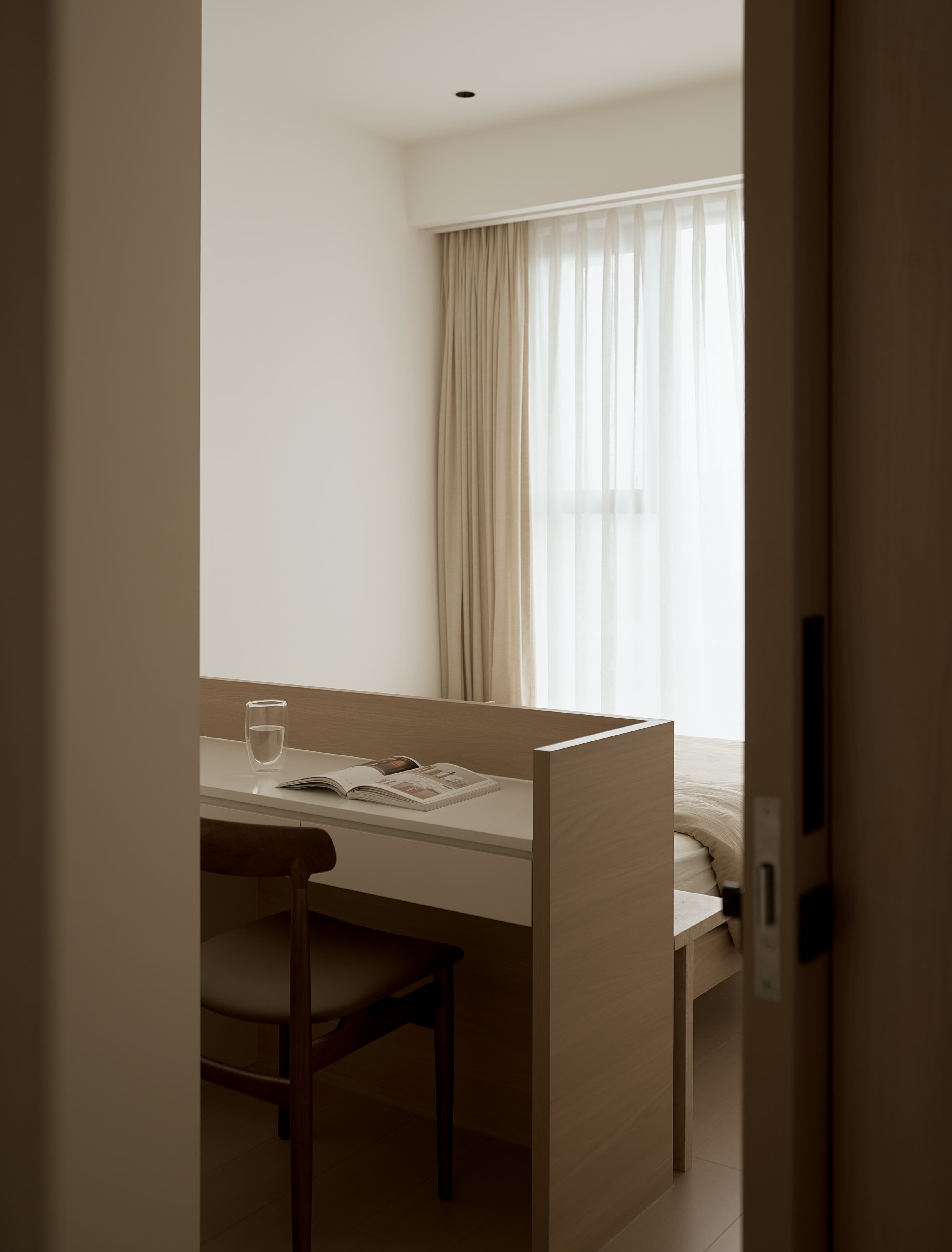
- The end of the bedroom, beside the wardrobe or under the window. It is quiet, but you will see your work every evening, so plan a way to close or cover it.
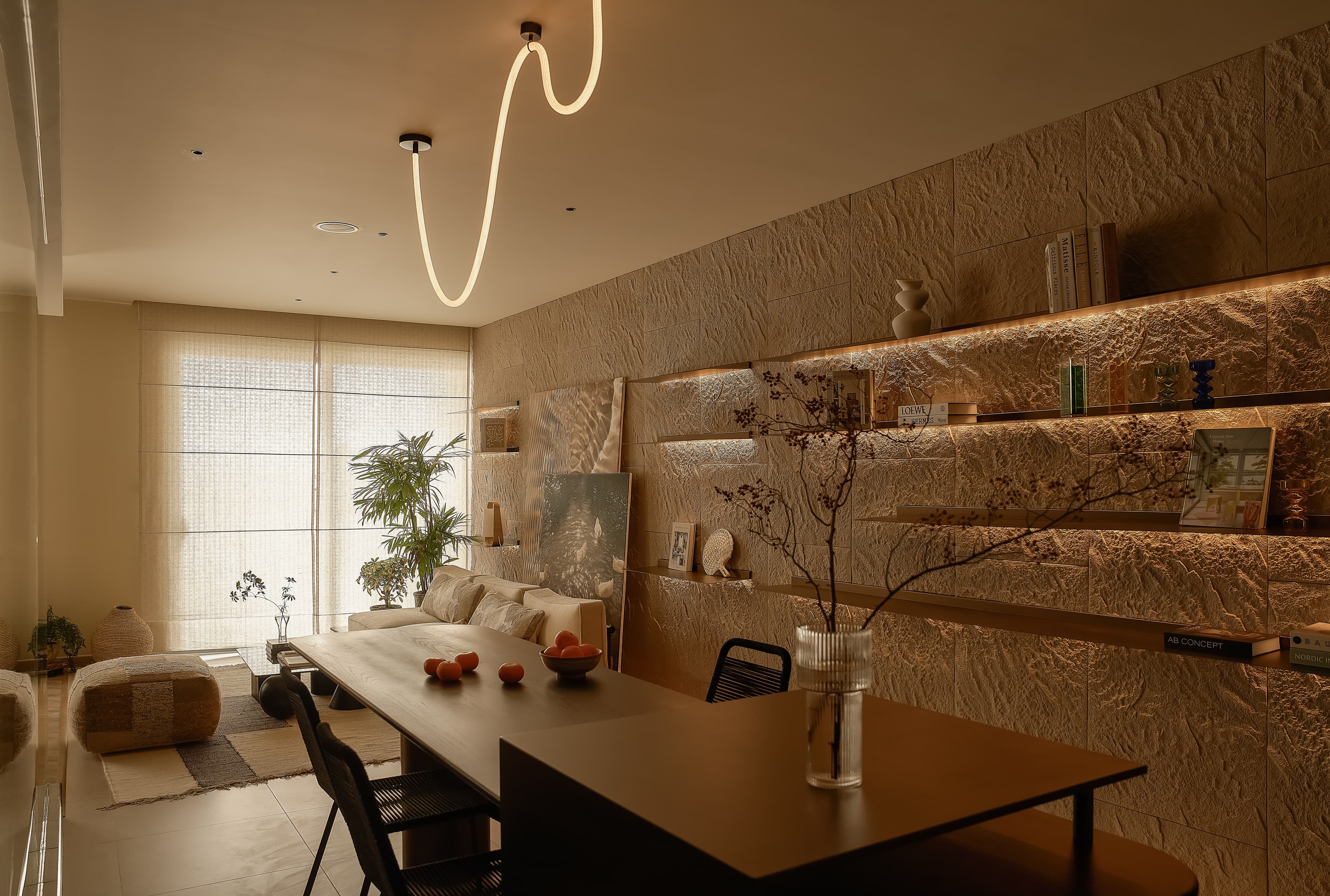
- A corner of the living room, separated by a shelf, a rug or a change of wall colour. This suits people who like to stay near the family.
- A wide windowsill, extended into a desk surface. We wrote about this idea in our post on choosing colours before furniture.
- A hallway niche that is deep enough for a narrow desk and a chair that can tuck in fully.
Wherever it goes, try to put the desk beside the window rather than directly facing it or with the window behind your screen. Side light is easier on the eyes and avoids glare on the monitor.
Get the size right
A small desk can work well, but check three measurements before buying or building:
- Depth: about 50 to 60 cm usually fits a laptop and a notebook. A separate monitor needs more depth so it is not too close to your eyes.
- Width: measure what you actually use every day, then add space to write or put down a cup.
- Leg room: make sure your knees fit under the desk with the chair pulled in, and that nothing blocks your feet.
If two people work from home, it is often better to plan one long shared surface than two separate small desks.
Plan the details people forget
Power and cables. Decide where sockets go before building. A cable tray under the desk keeps chargers and adapters off the floor.
Light. Add a task lamp for evenings. Many people find it comfortable on the side opposite their writing hand so it does not cast a shadow.
Storage. Use the wall above the desk for shelves or a pinboard, and keep a closed cabinet or drawer for papers so the surface stays clear.
A way to finish the day. A sliding panel, a curtain or a cabinet door that closes over the desk helps the home feel like a home again in the evening.
A short checklist before you start
- Which room and which spot, with measurements
- Desk height, depth and width that suit the person who will use it
- Chair, screen position and lighting
- Where the sockets and cables go
- How the corner will look when work is finished
Let us help you plan it
At SoulRoom, we design and build homes that are beautiful, comfortable and suited to your budget, including work corners that fit the way your family lives. If you are still planning the rest of the home, our guide to planning an apartment interior around your budget is a good place to start, and you can see more ideas in our projects.
If you want a home office corner but are not sure where it should go, send us a message with your floor plan and a few words about who will work there.