Ask most families how they planned their living room and the answer starts with the TV. Its size decides the wall, the wall decides the sofa, and the sofa decides everything else. The result is often a room arranged for watching, not for living.
The TV is not going away. But the way it sits in the room changes how the room feels, and a few recent ideas show how to keep it from taking over.
When the TV becomes the whole room
In an opinion piece for Dezeen, the New Jersey interior designer Claire Keane calls the TV "among the most challenging design problems" in today's homes. Open-plan layouts removed the walls and corners where a screen used to sit, while screens kept getting bigger.
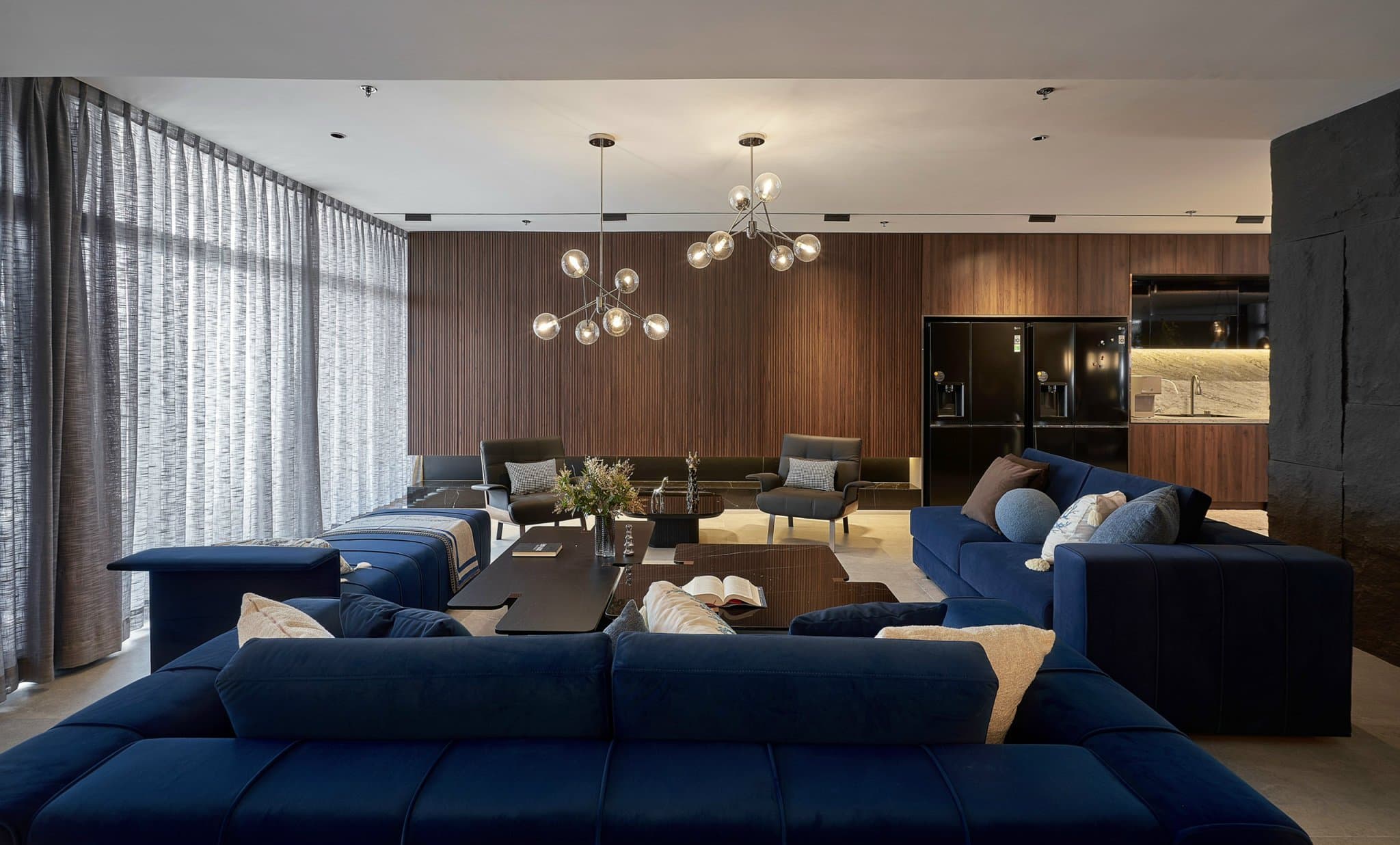
"It's almost impossible to successfully arrange furniture to orient to two different focal points in the same room," Keane writes. Keane's answer, when space allows, is a separate den: a smaller, cosier room for watching, so the main living space can be arranged around conversation. "In my experience, social spaces that are not dominated by TVs encourage more interaction," Keane says.
Most apartments do not have a spare room for a den. But the principle still works: decide whether the living room is mainly for watching or mainly for being together, and design for that first.
Less in the room, more to the room
A Dezeen collection of minimalist living rooms points the same way. It follows a 2026 trend forecast in which designers predicted "a disciplined, intelligent restraint that borrows from maximalism's warmth but strips its excess".
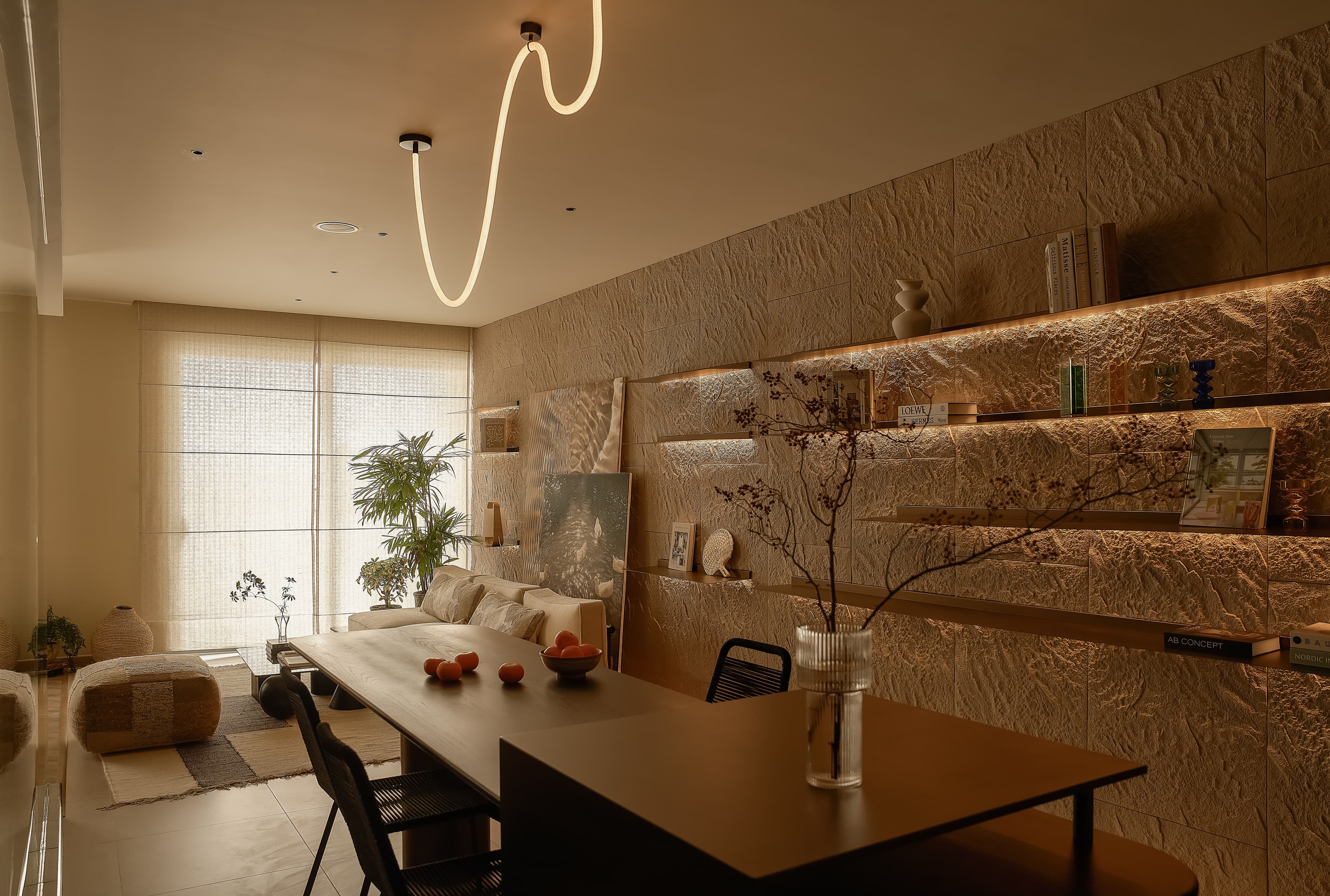
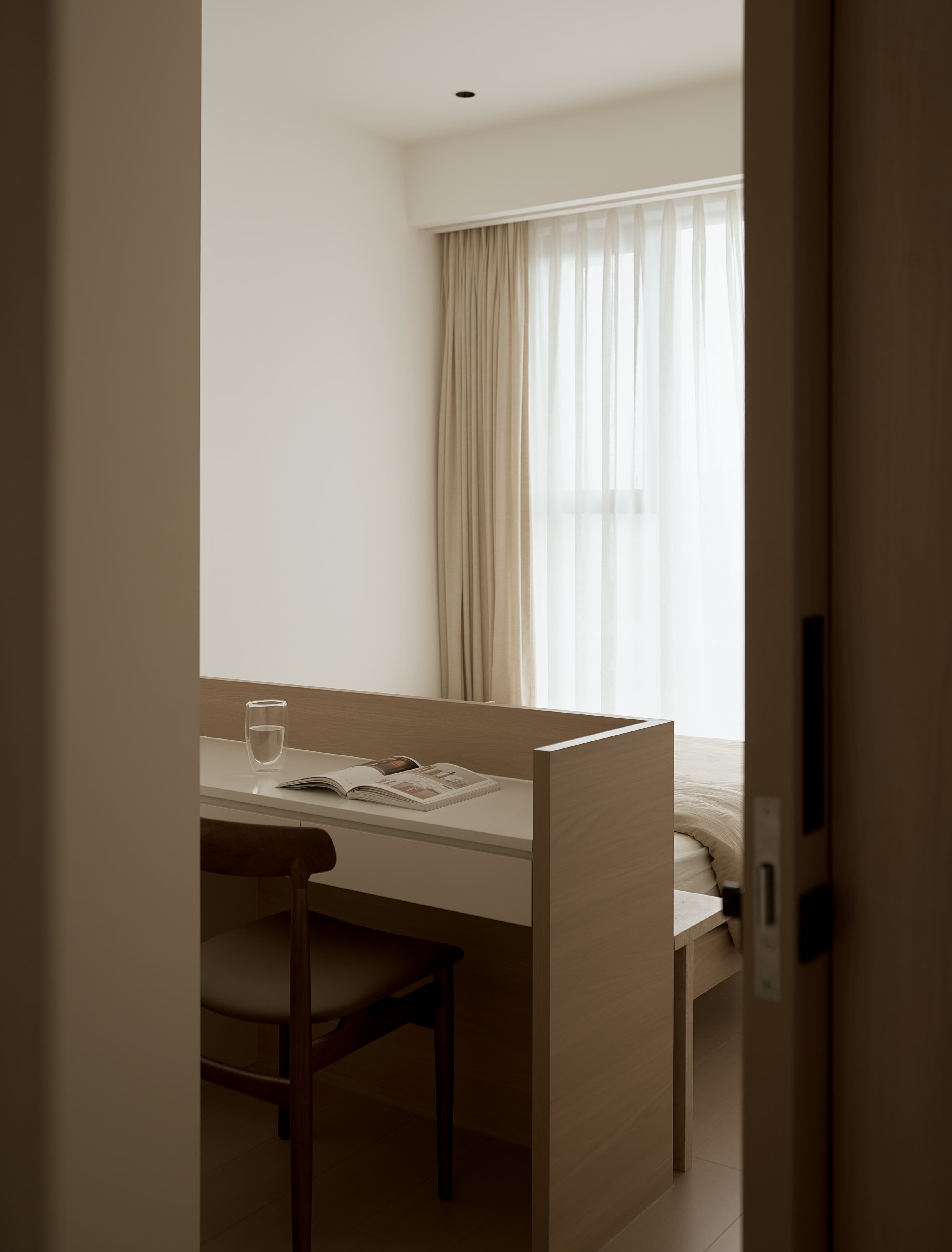
The rooms in it share a few habits: one or two main materials such as timber or lime plaster, very few pieces of furniture, and colour used in small, deliberate doses. In his own Cotswolds retreat, the architect John Pawson admits, "There's very little stuff." The calm comes from what is left out.
What a living room can learn from this
- Decide the main use first. If the family mostly watches films together, give the TV the best wall and good seats. If the room is mostly for guests and conversation, turn the seating towards each other and let the TV sit to one side.
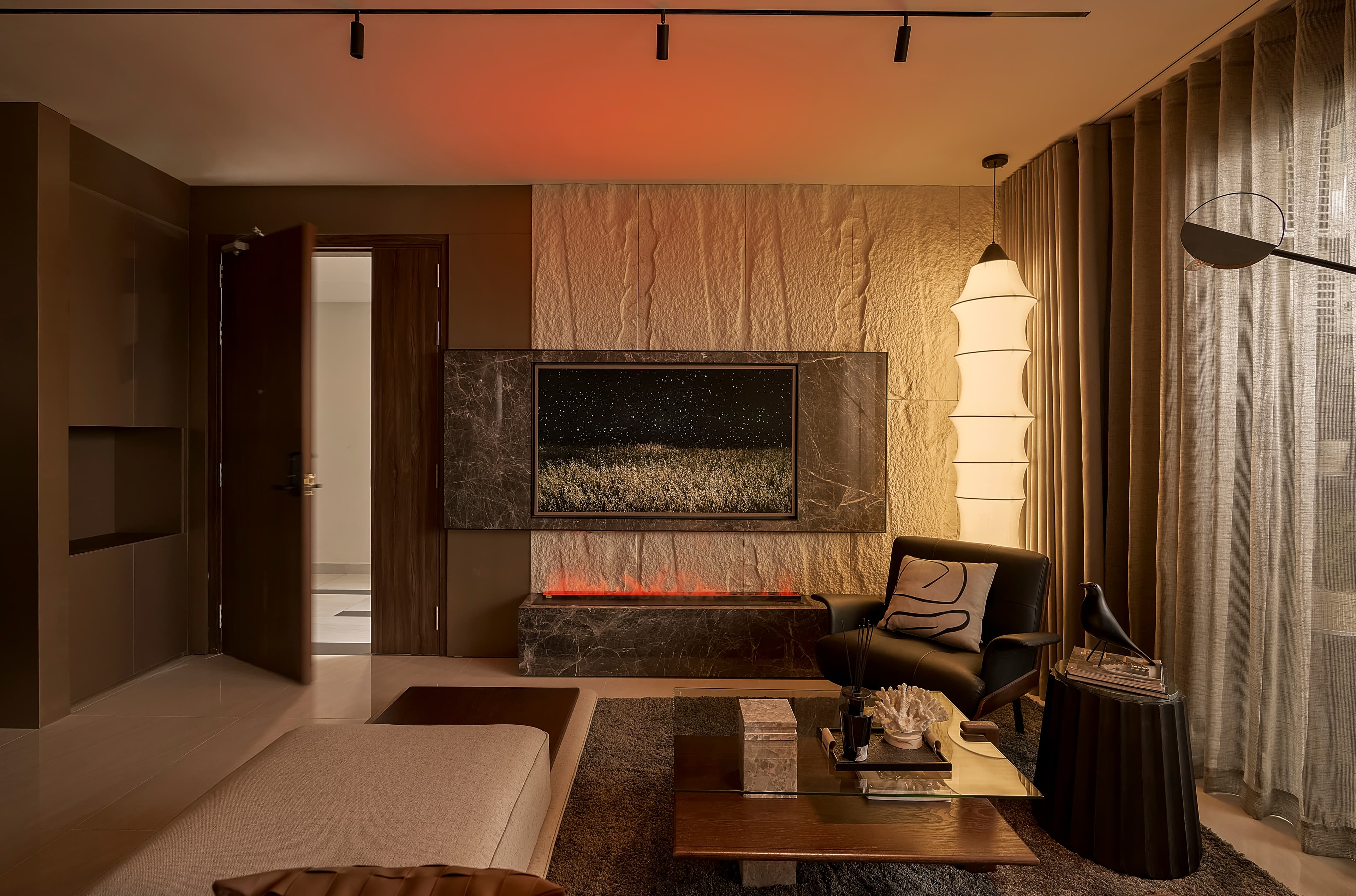
- Build the TV into a wall, not onto it. A recess, a stone or timber frame or a shelving wall makes the screen part of the architecture. When it is off, it looks like a dark panel in a composition, not a black hole.
- Keep the screen at eye level. A TV mounted too high, above a cabinet or a fireplace, is uncomfortable to watch. The centre of the screen should sit roughly at the eye height of someone seated.
- Hide the wires and boxes. Plan conduits, sockets and a closed cabinet for routers and players before the wall is finished. Visible cables undo a calm room faster than anything else.
- Light the room for evenings. A floor lamp, a soft light behind or beside the TV and dimmable ceiling lights make watching easier on the eyes and let the room feel warm when the screen is off.
Before you design your living room
- Measure the viewing distance. A larger screen needs more distance from the sofa. Choose the TV size from the room, not the other way round.
- Check the light from the windows. A screen opposite a bright window will reflect it all afternoon. Sheer curtains or a different wall solve this better than a brighter TV.
- Agree on what stays visible. Decide which objects, books and photos you want to show, and give everything else a closed place to go.
For the rest of the home, our guides to choosing colours before furniture and dividing an open-plan apartment without walls show how to keep one style across rooms.
Let SoulRoom help you plan it
At SoulRoom, we design and build homes that are beautiful, comfortable and suited to your budget. In the living room of Park Legend 2103, the TV is set into a dark marble frame on a textured plaster wall, with a low marble ledge below it. A paper floor lamp, track lights and sheer curtains keep the room warm and soft, whether the screen is on or off.
If your living room is planned around a TV you would rather not look at, send us a message with photos and its measurements, and we will help you plan a room for living, not only for watching.