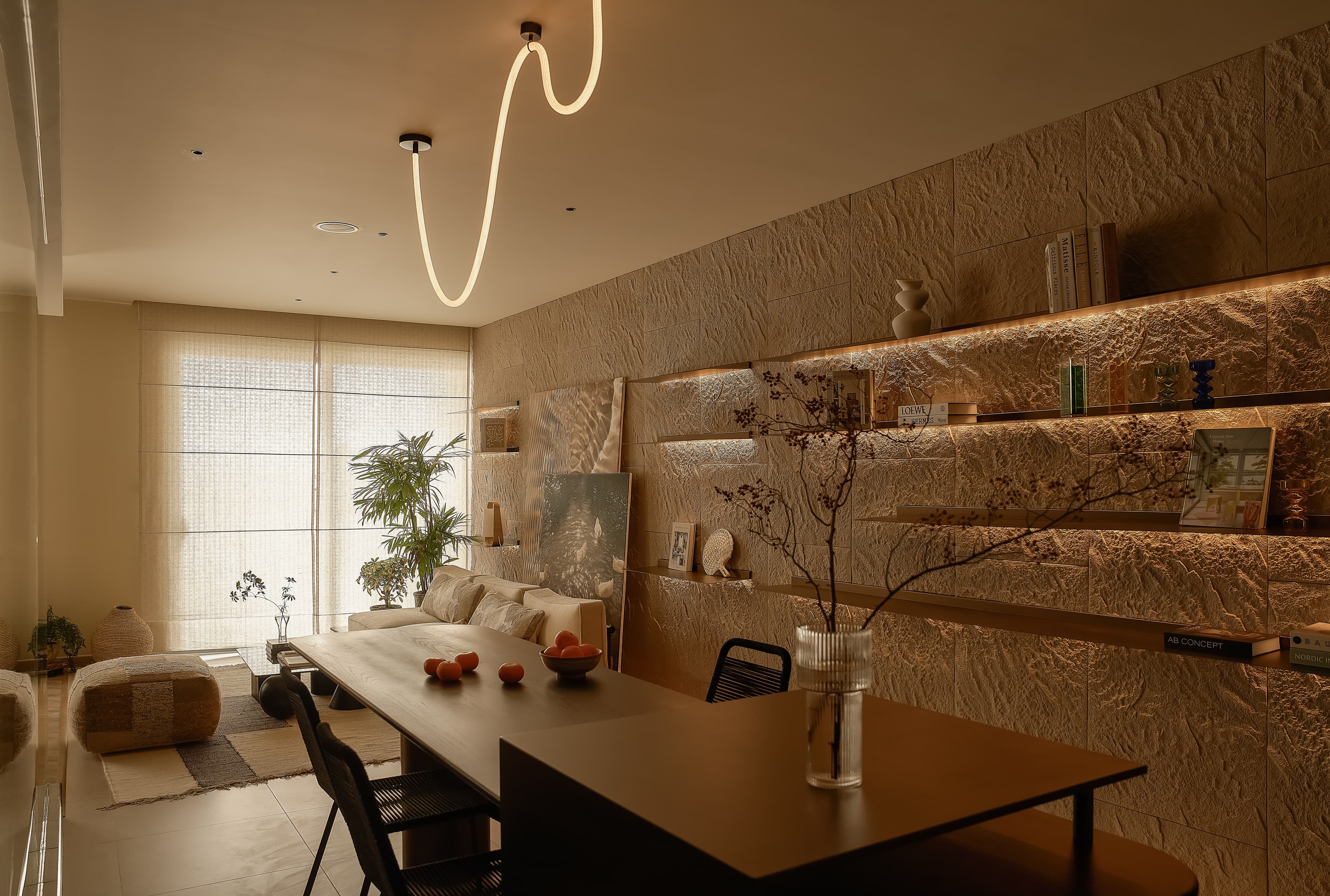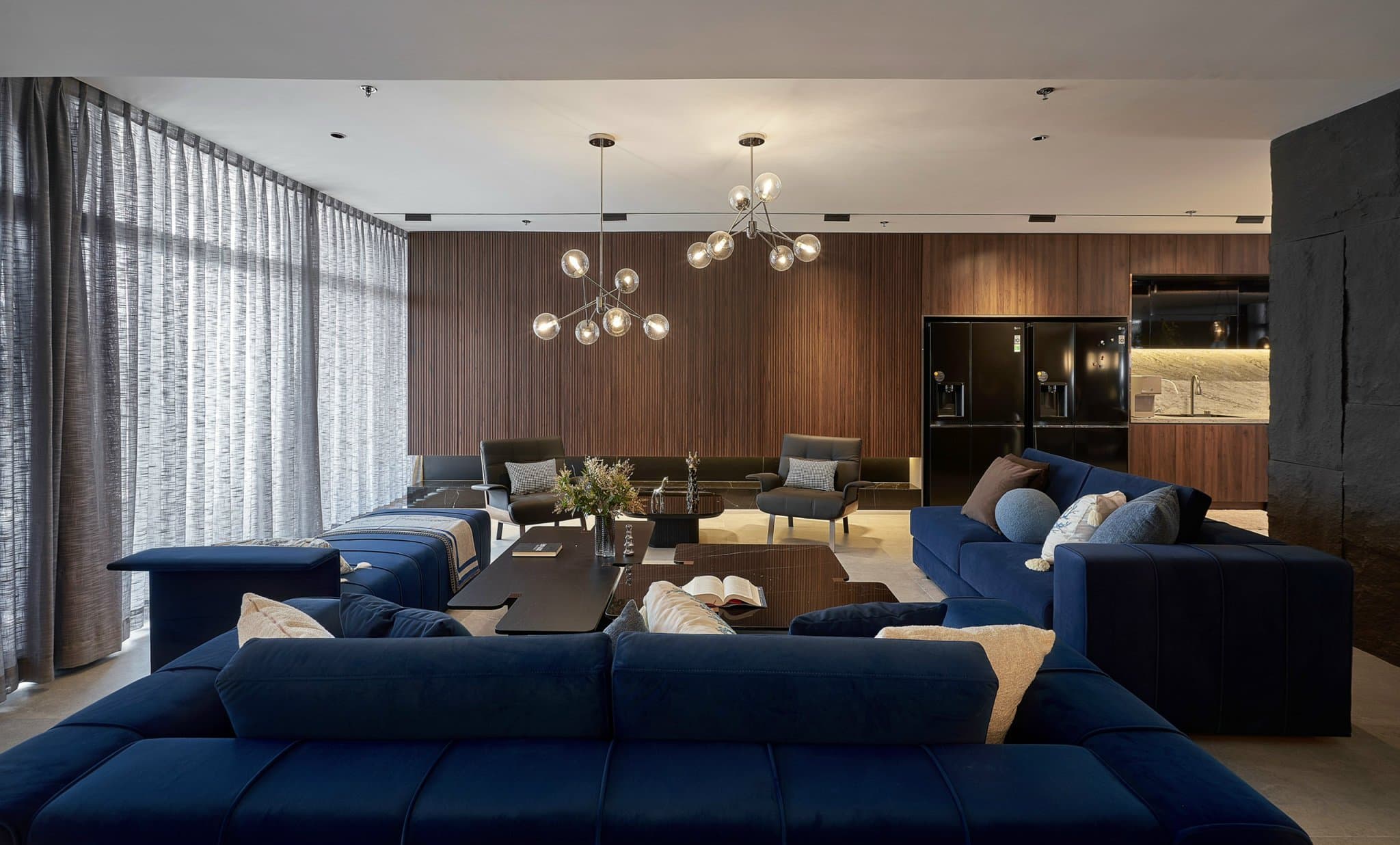
In many apartments, lighting is decided by the electrician: a grid of downlights on the ceiling and one switch at the door. The room is bright, but it never feels warm. Light is one of the cheapest ways to change how a home feels, and one of the most often forgotten.
Good lighting starts with daylight and then adds warm light in layers, each with a job. Two recent examples show how.
Start with daylight
In Barcelona, Raúl Sánchez Architects, winner of interiors project of the year at the 2026 Dezeen Awards, turned an old laundry house into Casa de las Lavanderas, an 80-square-metre home. The lower floor was partly underground and very dark at the back.
"To bring light into it, I incorporated this lightwell topped with a skylight," said founder Raúl Sánchez. Painted Klein blue, the lightwell connects the two floors, and round openings on all four sides spread its light through the home. Folding doors in wood and rice paper divide the living area without blocking the light, and a mirror-clad kitchen island reflects it further into the room.
Most apartments cannot add a skylight. But the same idea applies: find where daylight enters, and do not block it. Keep tall furniture away from windows, use translucent doors and screens instead of solid ones, and let pale or reflective surfaces carry the light deeper into the room.
Then add warm light where you live
A Dezeen collection of homes with Akari lamps, the paper lights designed by Isamu Noguchi in 1951 and still made with Japanese washi paper, shows the other half of the plan. In each home, a lamp sits in one deliberate place: a small orange light watching over a hallway in London, a lamp lighting a reading corner in São Paulo, others on a staircase and beside a stove.
None of these rooms rely on a single overhead light. Each lamp marks a place where something happens, and the soft paper diffuses the light so it glows rather than glares.
What an apartment lighting plan should include
- Map daylight first. Note where the sun enters at different times of day. Place desks and reading chairs near windows, and keep that path clear.
- Use three layers. General light for cleaning and moving around, task light for cooking, reading and working, and accent light that makes the room warm in the evening.
- Put warm light at eye level. Floor lamps, table lamps and wall lights near people feel more welcoming than bright light from above.
- Choose warm colour temperature. In living rooms and bedrooms, around 2700 to 3000K feels calm in the evening. Keep cooler light for the kitchen worktop or a work desk if you prefer.
- Give every layer its own switch or dimmer. Being able to turn the ceiling lights off and keep the lamps on changes a room more than any new piece of furniture.
Before you plan your lighting
- Decide furniture positions first. Sockets for floor lamps and wall lights depend on where the sofa, bed and desk will go.
- Plan switches by habit. Think about where you are when you turn lights on and off: at the door, by the bed, at the end of the hallway.
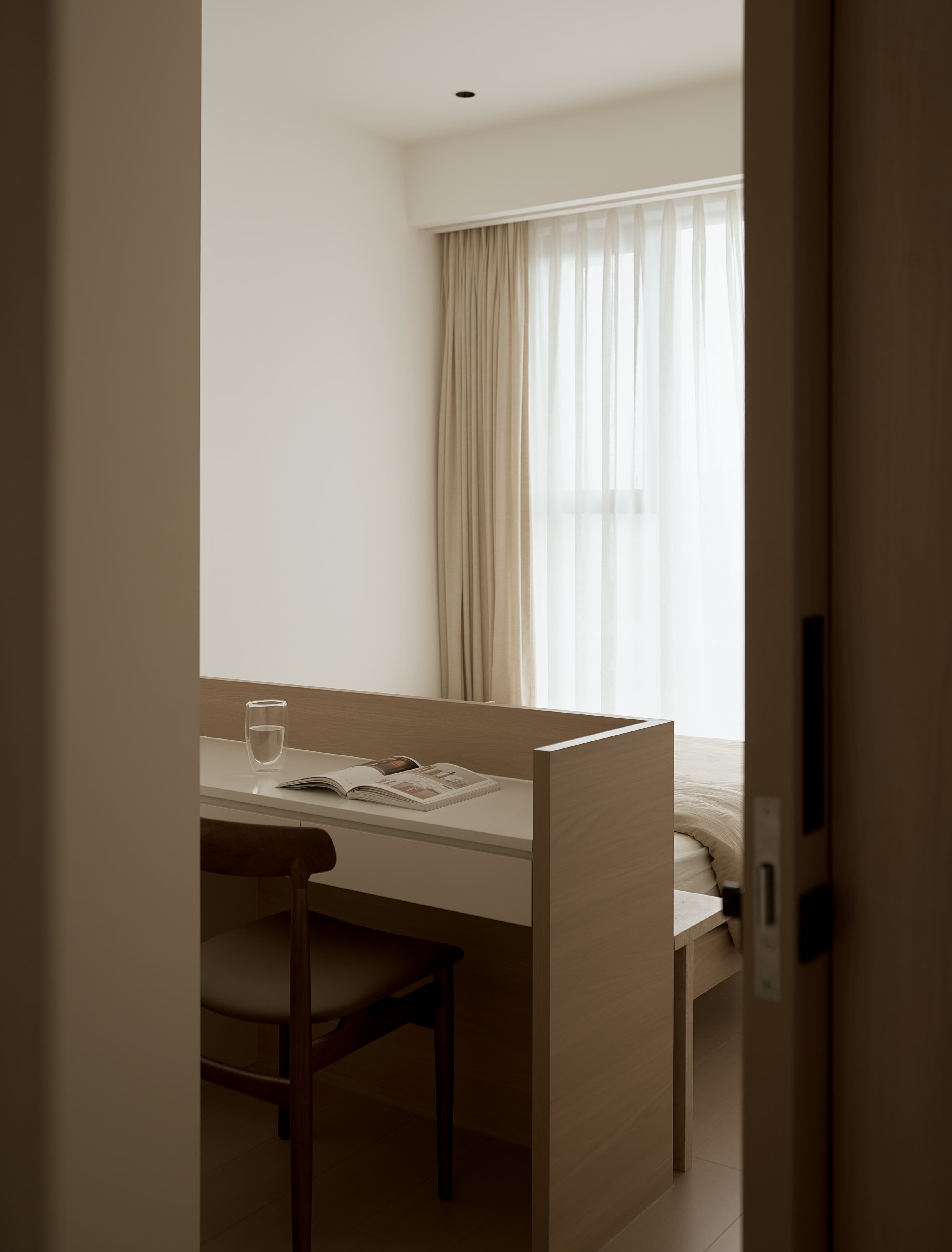
- Check glare from screens and windows. Avoid lights that reflect in the TV, and use sheer curtains to soften strong afternoon sun.
To make the rest of the room work with the light, our guides to planning the living room around the TV and choosing colours before furniture are good next steps.
Let SoulRoom help you plan it
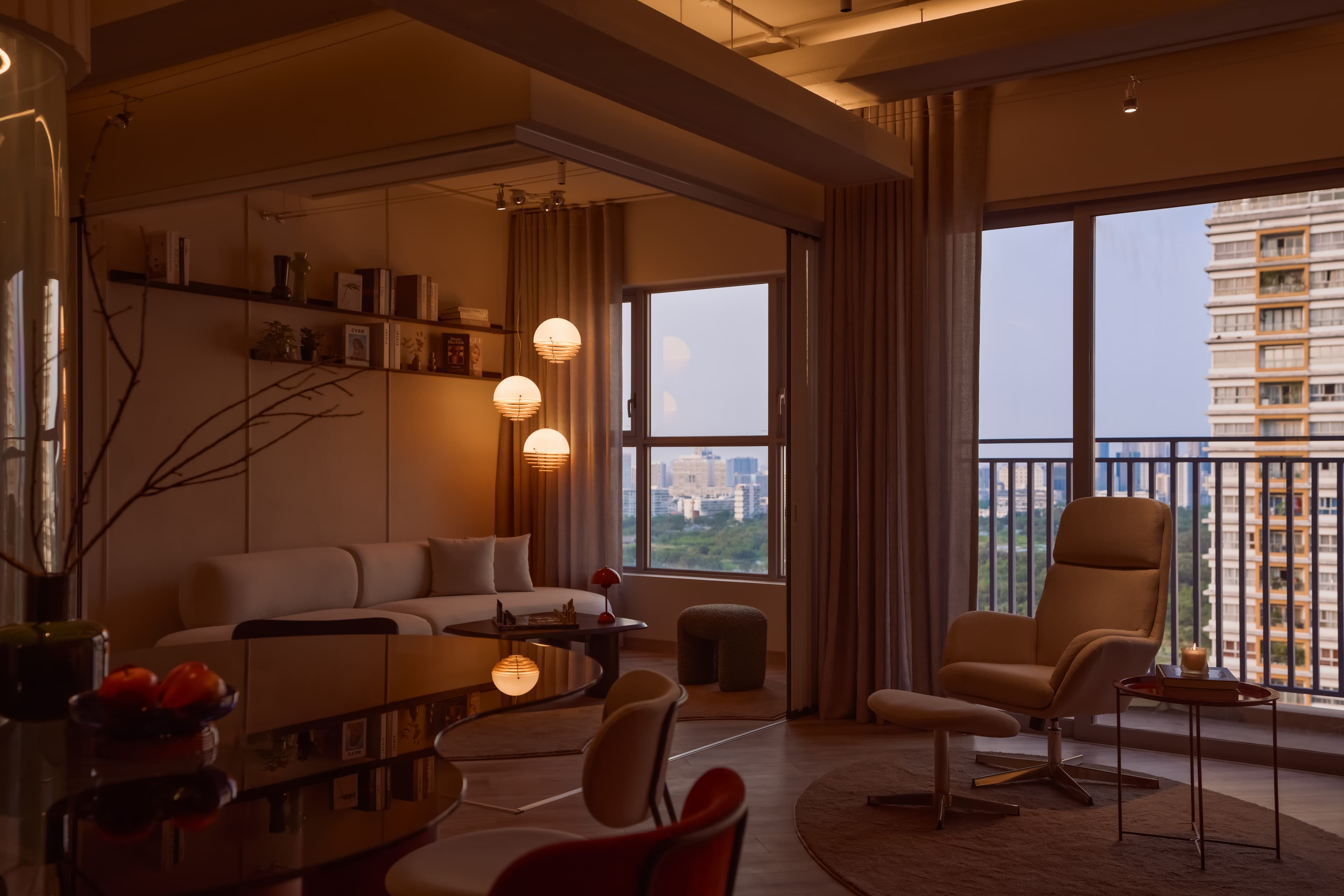
At SoulRoom, we design and build homes that are beautiful, comfortable and suited to your budget. In the living room of Fino House, daylight comes in through tall windows with sheer curtains, a cluster of round glass pendants hangs low beside the sofa, and lit shelves add a soft glow to the wall as evening falls.
If your home feels bright but not warm, send us a message with photos and a rough floor plan, and we will help you plan light for how you actually live.